
Crossing Oceans, Sharing Purpose: Lessons from Japan’s Most Advanced Rescue Teams
As a retired fire captain and federal instructor with over three decades in Urban Search and Rescue (USAR), my recent journey to Japan wasn’t just a cultural exchange—it was an educational experience rooted in shared service, mutual respect, and a commitment to lifesaving excellence.
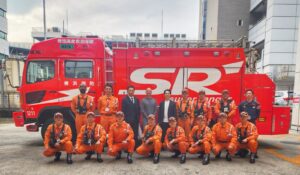
What stood out most? The unparalleled technical precision of the Japan Coast Guard and the elite Super Rangers of the Tokyo Fire Department. These professionals operate on a level that blends discipline, innovation, and adaptability—all vital traits for effective response in today’s high-risk environments.
Meeting Japan’s Most Elite Rescue Units
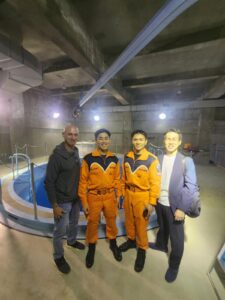
During my visit, I had the honor of meeting with personnel from the Japan Coast Guard, who handle complex maritime rescues and disaster response missions across one of the world’s busiest waterways. I was equally impressed by the Super Rangers, Japan’s most specialized urban search and rescue team. Their focus on high-angle rescues, confined space operations, and hazmat response reflects an unmatched level of technical and tactical training.
These teams operate with cutting-edge technology—from drones and real-time GIS mapping tools to robotic surveillance systems and custom-built rescue gear. Their use of integrated command platforms, multilingual AI-driven comms tools, and mobile decontamination units would be the envy of many U.S.-based agencies. Watching these systems in action was like seeing the future of emergency response unfold in real time.
Why Technology Alone Isn’t Enough
Despite the tech, what resonated most was their mindset—a blend of relentless training, precision teamwork, and humility. These qualities reminded me that no matter how advanced the tools, it’s the people behind them who make the mission successful. That lesson mirrors what I teach in Medical Team Training (MTT) back home: gear doesn’t save lives—teams do.
During my visit, I shared insights from my own deployments—including the Surfside building collapse, Hurricane Maria, and over 30 major incidents I’ve responded to throughout my career. In return, they shared case studies from their own operations, including earthquake response scenarios and complex maritime disasters that pushed their systems and personnel to the edge.
Coffee, Camaraderie, and Cross-Cultural Exchange
In between training discussions and station walkthroughs, I had the chance to introduce the teams to the Search Grounds Cuban Coffee Kit. It’s a small gesture—brewing strong Cuban coffee on-site—but in our line of work, moments like that matter. Sharing coffee isn’t just about caffeine; it’s about connection.
Whether it’s at a Miami command post or a Tokyo firehouse, a hot cafecito in the early hours of deployment helps responders reset, recharge, and refocus. That’s why I designed the kit—to support those doing hard things in hard places.
I left behind a full kit, complete with a brick of Search Grounds Brew, as a token of appreciation. Their gratitude was sincere, and the idea of pairing high-tech operations with a traditional coffee ritual brought unexpected joy to the exchange.
What I Took Home
This trip reaffirmed what I’ve always believed: learning is a two-way street. While I brought decades of field experience, I returned home humbled by Japan’s approach to rescue—especially their investment in continuous training and system-wide coordination.
To those unfamiliar with my background, I’m Miguel A. Ferrer, a retired fire captain, federal lead instructor, paramedic, water rescue and disaster response specialist. My company, Search Grounds, was born from the field, with a mission to bring good coffee and comfort to those facing bad days.
Final Thoughts
Japan reminded me that excellence in disaster response isn’t about ego—it’s about evolution. Whether you’re working in the rubble of an earthquake or navigating a typhoon in the Pacific, the mission is the same: protect life, work as one, and keep learning.
And maybe, just maybe—never underestimate what a strong cup of coffee can do for the team.