
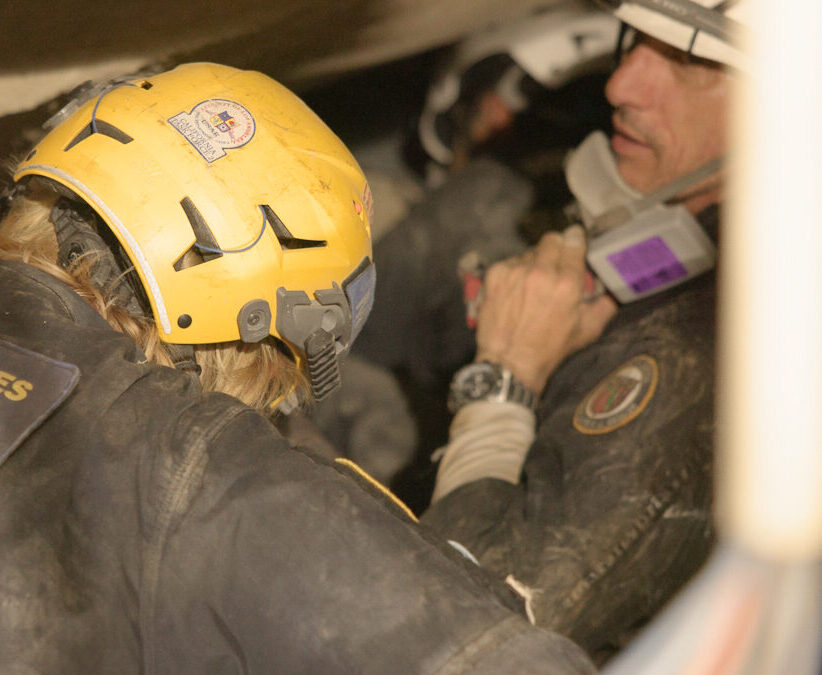
Miguel A. Ferrer US&R Medical Operations reflects lessons I’ve learned throughout my career and, most recently, during the 2026 Venezuela earthquake response. As a retired fire captain, Medical Specialist, and longtime US&R instructor, I’ve learned that medical care during a structural-collapse operation cannot simply wait for a patient to be extricated.
Sometimes the medical operation begins long before we can physically reach the patient.
The rescue of Hernán Gil in Venezuela provided an extraordinary example. Hernán survived approximately 159 hours of entrapment following the earthquake. His rescue required international US&R resources, prolonged technical operations, and medical decisions that had to evolve as rescuers gained access.
Miguel A. Ferrer US&R Medical Operations: Medicine Before Extrication
In traditional EMS, we generally reach the patient before meaningful treatment begins. Structural collapse can completely change that model.
Hernán was located using acoustic and radar victim-detection equipment. Rescuers then constructed an access tunnel, eventually establishing visual and verbal contact using a borescope camera. At that stage, medical personnel could communicate with him, but conventional physical access and vascular access were still unavailable.
That creates a fundamental US&R medical problem: How do we begin supporting a viable patient when the rescue may still take many hours?
The answer requires the medical and rescue components to work together from the beginning.
Adapting the Medical Plan to the Rescue Environment
Because IV access could not initially be established, a flexible hose was advanced through the tunnel to Hernán. This allowed fluids to be delivered orally under medical direction.
Over approximately 60 hours, he received 13.46 liters of fluid, alternating bottled water with isotonic glucose-electrolyte solutions. The documented average was approximately 224 mL per hour.
For Miguel A. Ferrer US&R Medical Operations, this is an important lesson: that wasn’t simply giving a trapped survivor something to drink.
Prolonged entrapment and immobility create concern for dehydration, rhabdomyolysis, electrolyte abnormalities, acute kidney injury, and crush syndrome. Early volume resuscitation is an important component of crush management, but the traditional recommendations assume IV access is available.
In this case, it wasn’t.
The oral route became an operational adaptation to a problem created by the collapse environment. The case does not establish oral resuscitation as a replacement for IV therapy. It does, however, provide an important case for further study when vascular access to an entrapped patient is impossible.
Monitoring a Patient You Cannot Reach
Treatment was only part of the challenge.
Medical personnel still needed to assess whether Hernán was tolerating the fluids and whether his condition was changing. The borescope became more than a search tool—it provided a way to conduct continued visual assessment.
Hernán remained alert and able to protect his airway. Urination could also be observed through the camera. Twenty-two episodes were documented during the rescue, providing one of the few available indicators of continued renal perfusion when laboratory testing and direct examination were impossible.
The operation also demonstrated why a medical plan must remain flexible. Structural instability forced rescuers to evacuate the approach for nearly 12 hours, temporarily stopping fluid delivery. The rescue environment dictated what medicine could safely accomplish.
Miguel A. Ferrer US&R Medical Operations
The medical risk changes again when an entrapped patient is finally released.
At extrication, Hernán’s ECG demonstrated peaked T waves, raising concern for hyperkalemia. Two peripheral IVs were established, and treatment included normal saline, calcium gluconate, sodium bicarbonate, and nebulized salbutamol. His heart rate subsequently decreased, and he remained hemodynamically stable during transport.
Subsequent laboratory testing showed preserved renal function, and renal replacement therapy was not required. Those findings are encouraging, but a single successful case should not be turned into a universal treatment protocol.
It should become something we study and learn from.
Lessons for US&R Medical Specialists
For me, the educational value of this rescue goes beyond one patient.
Miguel A. Ferrer US&R Medical Operations is ultimately about understanding that US&R medicine must adapt to the environment. Medical Specialists need to understand the rescue operation, anticipate what may happen during extrication, work closely with Rescue Specialists and physicians, and develop options when normal medical access isn’t possible.
After more than three decades in fire rescue, EMS, US&R, and disaster response, I still come home from deployments with lessons that make me rethink how we train.
Venezuela was one of those deployments.
The rescue of Hernán Gil demonstrated what can happen when technical rescue, medicine, technology, and international cooperation work toward the same objective.
The patient doesn’t begin at the end of the tunnel. Our medical responsibility begins the moment we know they’re there.